

Time holds immense value, and its effective use can make a notable difference in productivity, efficiency, and overall outcomes.
For SEO professionals, effective time management is especially important. Between keyword research, technical audits, content optimization, reporting, client communication, and keeping up with algorithm updates, managing time efficiently can be the difference between constant stress and sustainable success.
Mastering the art of time management allows you to harness every moment efficiently, leading to improved performance, reduced stress, and effortless goal attainment.
What is Time Management?
Time management refers to the practice of effectively and efficiently utilizing one’s time to accomplish tasks, meet goals, and prioritize activities. It involves skills and techniques that enable individuals to plan, organize, and allocate their time in a way that maximizes productivity and minimizes wasted time.
Effective time management involves setting clear objectives, prioritizing tasks, creating schedules, avoiding distractions, and employing strategies to optimize efficiency and effectiveness in various aspects of life, including work, personal commitments, and leisure activities. It is a valuable skill that helps individuals make the most of their available time, achieve their goals, reduce stress, and maintain a healthy work-life balance.
In SEO, time management helps professionals balance multiple ongoing projects, prioritize high-impact tasks, and ensure that strategic initiatives receive the attention they deserve.
7 Time Management Strategies for Enhanced Productivity and Success
In this piece, we will explore seven practical strategies and techniques to help you excel in mastering time management within your professional life.
Whether you’re managing SEO campaigns for clients, running an agency, or growing an in-house search strategy, the following techniques can help improve productivity and reduce overwhelm.
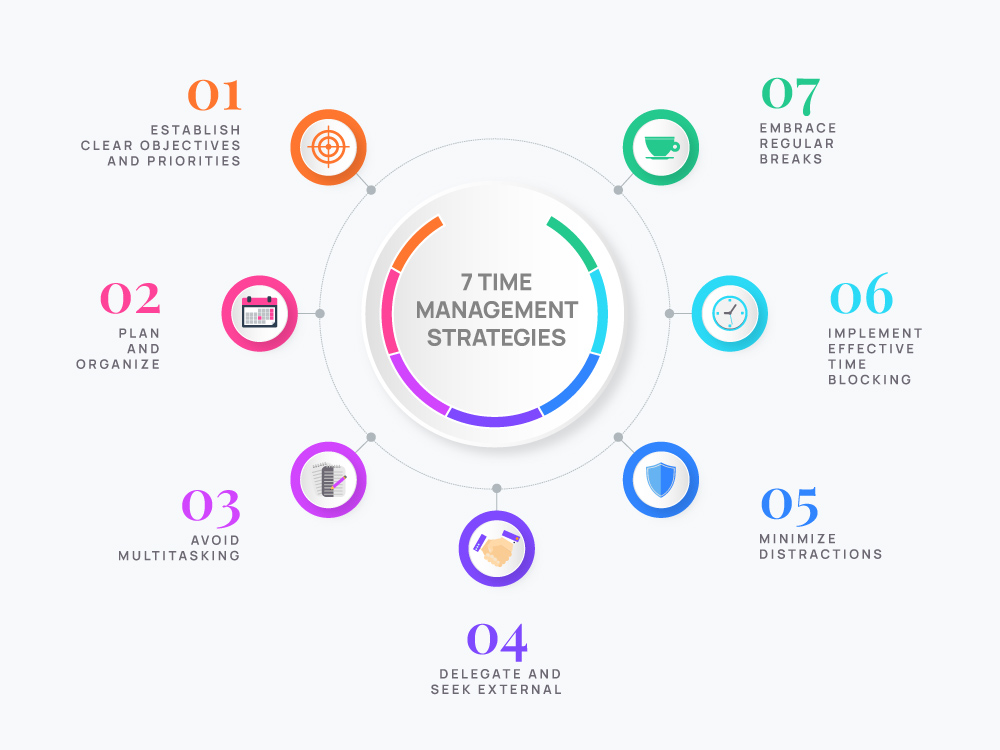
1. Establish Clear Objectives and Priorities
Initiating effective time management begins with setting unambiguous goals and priorities. Take time to identify both your short-term and long-term objectives.
Once you have a clear vision of what you aim to achieve, break down your goals into actionable tasks and prioritize them based on their significance and urgency. This approach enables you to direct your time and energy towards tasks that align with your objectives, facilitating progress in the desired direction.
In SEO, this could mean prioritizing tasks that drive the greatest impact, such as resolving technical issues, optimizing high-value content, or improving conversion-focused landing pages before tackling lower-priority activities.
2. Plan and Organize
Planning and organizing your time are fundamental to maximizing productivity. Start by devising a daily or weekly schedule that allocates specific time blocks for various activities such as meetings, focused work, and breaks. Employ productivity tools like calendars, to-do lists, or project management software to stay organized and monitor your progress.
Successful SEO campaigns often involve multiple moving parts. Organizing keyword research, content planning, backlink outreach, site audits, and reporting through structured workflows can help ensure nothing falls through the cracks.
Remember to allot time for unexpected interruptions or emergencies to avoid feeling overwhelmed when they arise.
3. Avoid Multitasking
Contrary to popular belief, multitasking often undermines productivity instead of enhancing it. Rather than trying to handle multiple tasks concurrently, dedicate your attention to one task at a time. Prioritize your tasks and complete them sequentially. This approach allows you to dedicate undivided attention to each task, resulting in higher-quality work and faster completion times.
For example, instead of switching between content optimization, rank tracking, and technical audits, focus on completing one SEO task before moving to the next. This often leads to better analysis and fewer mistakes.
4. Delegate and Seek External
Acknowledge that you cannot accomplish everything on your own. Delegating tasks to capable colleagues or outsourcing specific responsibilities can free up your time and enable you to concentrate on high-value activities that require your expertise.
Clearly communicate your expectations, provide necessary instructions, and trust your team to deliver quality outcomes. Delegation not only reduces your workload but also empowers others and fosters teamwork.
Many SEO professionals benefit from delegating tasks such as content creation, data collection, design work, or outreach activities, allowing them to focus on strategy and decision-making.
5. Minimize Distractions
Distractions abound and can significantly impact your productivity. Take proactive measures to minimize distractions during work hours. Silence your phone or employ productivity apps that temporarily block notifications.
Close unnecessary browser tabs or applications unrelated to your current task. Set specific times for checking emails and messages rather than interrupting your workflow incessantly. By creating a focused work environment, you can maximize concentration and accomplish more in less time.
SEO work often requires deep concentration, especially when conducting technical audits, analyzing performance data, or developing content strategies. Reducing interruptions can significantly improve the quality of your work.
6. Implement Effective Time Blocking
Time blocking is a potent technique that involves dedicating specific time blocks to particular tasks or activities. By dividing your day into distinct periods for different types of work, you can optimize focus and minimize context switching.
For instance, allocate a block of time for responding to emails, another for creative brainstorming, and yet another for strategic planning. This method helps maintain momentum, reduces procrastination, and ensures that crucial tasks receive the attention they deserve.
Many SEO professionals dedicate separate blocks of time to keyword research, content optimization, technical analysis, reporting, and client communication. This structure improves focus and helps maintain consistent progress.
7. Embrace Regular Breaks
Though it may seem counterintuitive, regular breaks are vital for sustaining productivity and mental well-being. Our brains require periodic rest to recharge and maintain focus.
Incorporate brief intervals of rest in your timetable, such as engaging in stretching exercises, taking a stroll, or practicing mindfulness techniques. Stepping away from work for a few minutes can refresh your mind, reduce stress, and enhance creativity upon your return.
Taking breaks can be particularly valuable when reviewing large datasets or conducting detailed SEO analysis, as fresh eyes often uncover opportunities that might otherwise be missed.
Key Takeaway
Mastering time management is a critical skill for SEO professionals. By setting clear goals, prioritizing high-impact activities, minimizing distractions, and implementing structured workflows, SEO specialists can improve productivity while maintaining a healthier work-life balance.