
Keyword research is the foundation of every successful SEO strategy. Whether you’re launching a new website, writing a blog post, optimizing a service page, or planning an entire content marketing campaign, choosing the right keywords determines whether your content reaches the right audience.
Every day, billions of searches are performed on Google. Behind each search is a person looking for information, comparing products, solving a problem, or making a purchase.
Keyword research helps you understand exactly what your audience is searching for so you can create content that matches their needs.
However, modern keyword research is about much more than finding high-volume keywords. Search engines have become significantly better at understanding context, search intent, and topical relevance.
Instead of targeting individual keywords in isolation, successful SEO now focuses on understanding the entire topic, analyzing search intent, evaluating competition, and creating comprehensive content that satisfies users.
Whether you’re a business owner, marketer, blogger, or SEO professional, learning how to conduct effective keyword research allows you to:
- Discover topics your audience actively searches for.
- Understand customer intent.
- Find realistic ranking opportunities.
- Build a stronger content strategy.
- Increase qualified organic traffic.
- Improve conversions and revenue.
In this complete guide, you’ll learn what keyword research is, why it matters, how to find profitable keywords, the tools professionals use, common mistakes to avoid, and the best practices for building a sustainable SEO strategy.
What Is Keyword Research?
Keyword research is the process of discovering and analyzing the words and phrases people type into search engines when looking for information, products, or services.
The goal isn’t simply to find popular keywords. Instead, keyword research helps you understand:
- What your audience is searching for.
- How often they search.
- How competitive those keywords are.
- Why they’re searching.
- Whether those searches align with your business goals.
For example, someone searching for:
“what is keyword research”
is looking for educational information.
Meanwhile, someone searching:
“best keyword research tools”
is comparing software solutions.
And someone searching:
“buy keyword research software”
is much closer to making a purchase.
Although these searches all involve keyword research, the user’s intent is completely different.
That’s why modern SEO focuses on understanding search intent, not just keywords.
Why Is Keyword Research Important for SEO?
Without keyword research, you’re essentially creating content based on assumptions instead of real user demand.
Keyword research allows you to make informed decisions backed by search data.
It helps you create content that people are already looking for rather than hoping they’ll discover it.
Some of the biggest benefits include:
1. Understand Your Audience
Keyword research reveals the exact language your audience uses.
Instead of guessing what potential customers want, you can build content around real search behavior.
2. Increase Organic Traffic
Targeting the right keywords improves your chances of appearing in relevant search results.
The better your visibility, the more qualified organic traffic your website can attract.
3. Create Better Content
Understanding keyword intent helps you create content that directly answers users’ questions.
Google rewards pages that satisfy search intent rather than simply repeating keywords.
4. Find Content Opportunities
Keyword research uncovers topics your competitors may have overlooked.
These opportunities often become some of the easiest pages to rank.
5. Support Every SEO Activity
Keyword research influences almost every aspect of SEO, including:
- Content strategy
- On-page optimization
- Internal linking
- Technical SEO
- Content clusters
- Landing pages
- Product pages
- Local SEO
- PPC campaigns
It’s one of the few SEO activities that impacts nearly every stage of your marketing strategy.
How Search Intent Shapes Keyword Research
One of the biggest misconceptions about keyword research is believing that every keyword with high search volume is worth targeting.
In reality, understanding why someone performs a search is often more important than the keyword itself.
This is known as search intent.
Google’s goal is to deliver results that best satisfy the user’s intent, so your content should do the same.
Search intent generally falls into four categories:
| Search Intent | Example |
|---|---|
| Informational | “what is keyword research” |
| Navigational | “Google Keyword Planner” |
| Commercial | “best keyword research tools” |
| Transactional | “buy keyword research software” |
Creating content that matches the appropriate search intent significantly improves your chances of ranking.
For a deeper understanding of user intent and how Google interprets searches, see our guide on Search Intent.
Key Keyword Metrics You Should Understand
Professional SEO isn’t based solely on search volume.
Before selecting a keyword, evaluate several important metrics.
1. Search Volume
Search volume estimates how many times a keyword is searched each month.
High search volume often means greater traffic potential, but it also usually indicates stronger competition.
2. Keyword Difficulty (KD)
Keyword Difficulty estimates how difficult it may be to rank on the first page for a keyword.
Lower-difficulty keywords are often better opportunities for newer websites.
Learn in depth about Keyword Difficulty.
3. Search Intent
Always determine whether the keyword matches your content goals.
A keyword with lower volume but strong commercial intent may outperform a high-volume informational keyword.
Learn in depth about search intent.
4. Cost Per Click (CPC)
Although primarily used for paid advertising, CPC can indicate commercial value.
Keywords with higher CPC often attract visitors who are closer to making purchasing decisions.
5. Traffic Potential
Rather than focusing on a single keyword, estimate how much total traffic a page could receive by ranking for multiple related searches.
Modern SEO targets topics rather than isolated keywords.
6. SERP Features
Examine whether Google displays:
- Featured Snippets
- AI Overviews
- Images
- Videos
- Local Pack
- People Also Ask
- Shopping results
These features influence both visibility and click-through rates.
Types of Keywords in SEO
Not all keywords serve the same purpose. Understanding the different types of keywords helps you build a balanced SEO strategy that attracts visitors at every stage of the customer journey.
1. Short-Tail Keywords
Short-tail keywords usually contain one or two words.
Examples include:
- SEO
- Keyword research
- Digital marketing
These keywords typically have:
- High search volume
- High competition
- Broad search intent
Although they can generate significant traffic, they’re often difficult for newer websites to rank for.
2. Long-Tail Keywords
Long-tail keywords are more specific search phrases containing three or more words.
Examples include:
- keyword research for SEO
- how to find keywords for a website
- best keyword research tools for beginners
Long-tail keywords generally have:
- Lower search volume
- Lower competition
- Higher conversion rates
- Clearer search intent
For most websites, long-tail keywords provide some of the best ranking opportunities. To learn in depth, see our guide on long-tail keywords that convert.
3. Branded Keywords
Branded keywords include a company or product name.
Examples:
- Google Keyword Planner
- Ahrefs Keywords Explorer
- SEMrush Keyword Magic Tool
These searches indicate that users are already familiar with a particular brand.
4. Non-Branded Keywords
Non-branded keywords don’t reference a specific company.
Examples include:
- keyword research tools
- SEO software
- website audit tool
These keywords often attract users earlier in their buying journey.
5. Question Keywords
Many users search by asking questions.
Examples include:
- What is keyword research?
- How do I find SEO keywords?
- Why is keyword research important?
Question-based content is particularly effective for earning Featured Snippets and appearing in Google’s People Also Ask results.
6. Local Keywords
Local keywords target users searching within a specific geographic location.
Examples:
- SEO agency in London
- keyword research service near me
- local SEO consultant
These keywords are essential for businesses serving local customers.
7. Commercial Keywords
Commercial keywords indicate that users are researching products or services before making a purchase.
Examples:
- best keyword research tools
- Ahrefs vs SEMrush
- keyword research software comparison
These users often have strong buying intent.
8. Transactional Keywords
Transactional keywords signal that users are ready to take action.
Examples include:
- buy SEO software
- hire SEO consultant
- keyword research service pricing
These searches often lead to the highest conversion rates.
A Step-by-Step Keyword Research Process
Professional keyword research isn’t about collecting thousands of random keywords. It’s about identifying opportunities that align with your business goals and user intent.
Here’s a practical workflow you can follow.

Step 1. Understand Your Audience
Before opening any SEO tool, think about your target audience.
Ask yourself:
- What problems are they trying to solve?
- What products or services do they need?
- What questions might they ask?
- Which words would they naturally use?
Understanding your audience provides the foundation for effective keyword research.
Step 2. Brainstorm Seed Keywords
Seed keywords are the broad topics that describe your business or niche.
For example, if you run an SEO website, your seed keywords might include:
- SEO
- Technical SEO
- Keyword research
- On-page SEO
- Link building
- Google Search Console
These broad topics will later expand into hundreds of related keyword opportunities.
Step 3. Expand Your Keyword List
Once you’ve identified your seed keywords, look for related searches.
Good sources include:
- Google Autocomplete
- People Also Ask
- Related Searches
- Google Trends
- Competitor websites
- Industry forums
- Reddit discussions
- YouTube suggestions
These sources often reveal real-world questions that keyword tools may overlook.
Step 4. Analyze Keyword Metrics
After building your keyword list, evaluate each keyword using metrics such as:
- Search Volume
- Keyword Difficulty
- CPC
- Search Intent
- Traffic Potential
Don’t choose keywords based solely on volume.
A keyword with 500 monthly searches and low competition may generate more business than a highly competitive keyword with 20,000 searches.
Step 5. Analyze the Search Results
One of the most overlooked parts of keyword research is studying the Search Engine Results Page (SERP).
Search the keyword manually and examine:
- Who ranks on Page 1?
- How comprehensive are the articles?
- Are the results mostly blogs, product pages, or videos?
- Does Google display a Featured Snippet?
- Is there an AI Overview?
- Are there YouTube videos or images?
- What questions appear in People Also Ask?
Understanding the SERP helps determine whether your content has a realistic chance of competing.
Step 6. Group Similar Keywords
Instead of creating separate pages for every keyword variation, combine closely related keywords into a single topic.
For example:
Primary keyword:
- keyword research
Supporting keywords:
- keyword research for SEO
- SEO keyword research
- how to do keyword research
- keyword research guide
Rather than creating four nearly identical pages, build one comprehensive guide that addresses all of these searches.
This approach is known as keyword clustering and aligns with how modern search engines understand topics.
Step 7. Map Keywords to Your Website
Every important keyword should have a clear destination.
For example:
| Website Page | Keyword Focus |
|---|---|
| Homepage | SEO services |
| Service Page | Technical SEO services |
| Knowledgebase | Keyword research |
| Blog | Best free keyword research tools |
| Landing Page | Local SEO services |
Keyword mapping prevents multiple pages from competing for the same search terms and supports a stronger site architecture.
Analyze Your Competitors
Competitor research is one of the fastest ways to discover valuable keyword opportunities.
Study websites that already rank for your target keywords and identify:
- Keywords they’re ranking for
- Content gaps
- Page structure
- Internal linking
- Search intent
- Featured Snippet opportunities
Competitor analysis isn’t about copying another website. It’s about identifying opportunities to create better, more comprehensive content.
For a complete process, see our guide on Competitor Analysis for SEO.
Best Keyword Research Tools
SEO professionals rarely rely on a single keyword research tool. Instead, they combine multiple sources to gather accurate data and uncover new opportunities.
Popular keyword research tools include:
- Google Keyword Planner
- Google Trends
- Google Search Console
- Ahrefs
- Semrush
- Moz Keyword Explorer
- Ubersuggest
- Mangools KWFinder
- Keywords Everywhere
- Keyword Surfer
Each tool offers different insights, from search volume and keyword difficulty to competitor analysis and content gap research.
Can AI Help with Keyword Research?
Artificial intelligence has become a valuable assistant for keyword research, but it shouldn’t replace SEO data.
AI tools can help you:
- Generate keyword ideas
- Discover related topics
- Group keywords into clusters
- Create topical outlines
- Brainstorm FAQs
- Identify content gaps
- Organize large keyword lists
However, AI tools generally don’t provide reliable search volume, keyword difficulty, or ranking data.
For accurate SEO metrics, use dedicated keyword research platforms alongside AI-generated insights.
The most effective strategy combines AI for ideation with trusted SEO tools for validation and decision-making.
Common Keyword Research Mistakes to Avoid
Even experienced marketers can make mistakes during keyword research. Choosing the wrong keywords or ignoring search intent can lead to poor rankings, wasted effort, and missed opportunities.
Here are some of the most common mistakes to avoid.
1. Focusing Only on Search Volume
High search volume doesn’t always mean high value.
Many broad keywords are extremely competitive and may attract visitors who aren’t interested in your products or services.
Instead, look for keywords that balance:
- Search volume
- Competition
- Search intent
- Business relevance
2. Ignoring Search Intent
One of the biggest reasons content fails to rank is because it doesn’t match what users expect.
For example, someone searching for:
“best keyword research tools”
expects a comparison article, not a definition of keyword research.
Always analyze the search results before creating content.
Targeting the Same Keyword on Multiple Pages
Creating multiple pages targeting the same keyword often results in keyword cannibalization, where your own pages compete against each other.
Instead, assign one primary keyword (or keyword cluster) to each page.
1. Ignoring Long-Tail Keywords
Many website owners chase highly competitive keywords while overlooking long-tail opportunities.
Although long-tail keywords have lower search volume, they often:
- Convert better.
- Match user intent more closely.
- Are easier to rank for.
- Build topical authority over time.
2. Not Analyzing Competitors
If the top-ranking pages thoroughly answer a search query, publishing a shorter or less comprehensive article is unlikely to outperform them.
Study competing pages to understand:
- Content depth
- Structure
- Search intent
- Internal linking
- SERP features
Then create something that provides even greater value.
3. Treating Keyword Research as a One-Time Task
Search behavior changes constantly.
New trends emerge, competitors publish new content, and Google’s search results evolve.
Review your keyword strategy regularly to identify new opportunities and maintain rankings.
Keyword Research Best Practices
Successful keyword research is an ongoing process rather than a one-time checklist.
Follow these best practices to build a sustainable SEO strategy.
1. Focus on Topics Instead of Individual Keywords
Modern search engines understand topics and entities rather than exact keyword matches.
Instead of creating multiple articles targeting slight keyword variations, publish one comprehensive resource that covers the entire topic.
2. Prioritize Search Intent
Always ask yourself:
“Does my content solve the problem behind the search?”
If the answer is yes, your chances of ranking improve significantly.
3. Build Topical Authority
Publishing multiple high-quality articles around related topics helps establish your website as an authority.
For example, a Keyword Research guide naturally connects with articles about:
This topic cluster strengthens your overall SEO strategy.
4. Use Multiple Data Sources
No keyword research tool is perfect.
Compare insights from several sources, including:
- Google Search
- Google Trends
- Google Search Console
- Ahrefs
- Semrush
- Competitor research
Combining data provides a more complete picture of search demand and competition.
5. Monitor Keyword Performance
Keyword research doesn’t end after publishing your content.
Track performance over time by monitoring:
- Rankings
- Organic traffic
- Click-through rate (CTR)
- Impressions
- Conversions
Use these insights to update existing content and identify new optimization opportunities.
Real-World Example of Keyword Research
Keyword research becomes far more effective when combined with a clear content strategy.
For example, while optimizing a SaaS company’s blog for organic growth, the initial website ranked for fewer than 50 non-branded keywords and generated relatively little organic traffic.
Instead of targeting highly competitive terms like innovation software, the strategy focused on long-tail keywords with clearer search intent, such as:
- Best innovation management software
- Breakthrough innovation vs. disruptive innovation
- Innovation process examples
These keywords had lower search volume but were significantly easier to rank for and attracted visitors with stronger commercial intent.
Using competitor analysis, Google Search Console, and professional SEO tools, we identified keyword gaps, optimized content around user intent, improved internal linking, and continuously monitored performance.
The results included:
- Organic traffic increased by more than 300% within six months.
- Over 50 pages reached Google’s first page within one year.
- Blog-generated revenue increased significantly through qualified organic traffic.
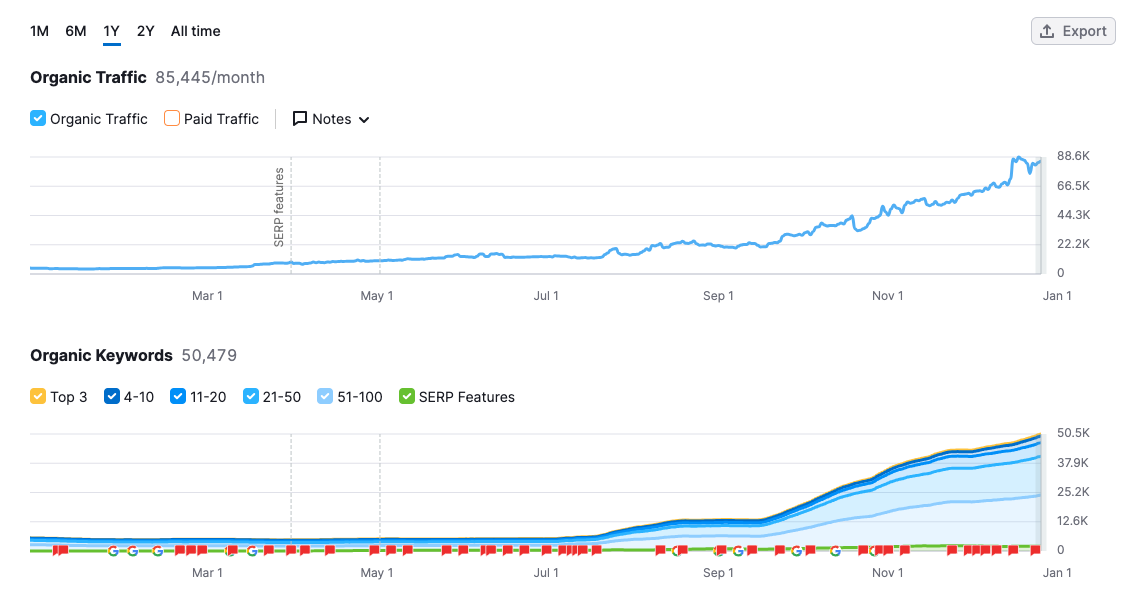
This experience highlights an important lesson: successful keyword research isn’t about finding the biggest keywords. It’s about identifying the right opportunities and creating content that best satisfies user intent.
Final Thought
Keyword research is the foundation of every successful SEO campaign. By understanding what your audience is searching for and why they’re searching, you can create content that satisfies user intent, earns higher rankings, and attracts qualified organic traffic.
Modern keyword research goes far beyond identifying high-volume search terms. It requires evaluating search intent, analyzing competitors, studying SERP features, grouping related keywords into topical clusters, and continuously refining your strategy based on real performance data.
Whether you’re launching a new website or expanding an established one, investing time in thorough keyword research helps you make smarter content decisions and build long-term organic growth. When combined with high-quality content, strong internal linking, and sound technical SEO, keyword research becomes one of the most valuable investments you can make in your website’s success.