
Every page on your website competes with thousands, sometimes millions, of other pages for visibility in search results. Simply publishing content is no longer enough. If search engines can’t understand your page or users don’t find it helpful, even the best-written content may never reach its audience.
This is where on-page SEO becomes essential.
On-page SEO is the practice of optimizing the content and HTML elements of individual web pages to help search engines understand their purpose while creating a better experience for visitors. It combines content quality, keyword optimization, website structure, user experience, and technical elements to improve a page’s ability to rank in organic search results.
Unlike off-page SEO, which focuses on building authority through backlinks and brand mentions, on-page SEO is entirely within your control. Every improvement you make, whether it’s writing a clearer title, organizing headings, improving page speed, or strengthening internal links, helps search engines better evaluate your content.
Modern on-page SEO is no longer about inserting keywords as many times as possible. Google’s algorithms now evaluate whether a page satisfies search intent, demonstrates expertise, provides a positive user experience, and genuinely helps users solve their problems.
In this comprehensive guide, you’ll learn what on-page SEO is, why it’s one of the most important components of search engine optimization, how Google evaluates web pages, and the best practices that can improve your rankings in both traditional search results and AI-powered search experiences.
What Is On-Page SEO?
On-page SEO is the process of optimizing individual webpages to improve their visibility in search engines and provide a better experience for users.
It includes everything you can directly control on a webpage, including:
- Content quality
- Keywords
- Title tags
- Meta descriptions
- Header structure
- URLs
- Internal links
- Images
- Structured data
- Page experience
The objective of on-page SEO is simple:
Help search engines understand your content while making your page the best possible answer for users.
Imagine writing an excellent article, but giving it a vague title, poor organization, slow loading speed, and no internal links.
Even though the information is valuable, Google may struggle to understand its relevance, while visitors may leave before reading it.
On-page SEO solves these problems by improving both discoverability and usability.
Think of it as preparing a book for a library.
The content is the story itself, but the title, chapters, index, cover, and organization help readers and librarians understand what the book is about.
Search engines evaluate webpages in much the same way.
The better your page is organized and optimized, the easier it becomes for search engines to understand its topic and recommend it for relevant searches.
Why On-Page SEO Matters
Many people assume rankings are determined primarily by backlinks.
While backlinks remain important, they cannot compensate for a poorly optimized page.
Imagine earning hundreds of high-quality backlinks to an article that doesn’t answer the user’s question.
Eventually, visitors leave.
Engagement drops.
Search engines recognize that users aren’t satisfied.
Rankings decline.
This demonstrates why on-page SEO forms the foundation of every successful SEO strategy.
Without strong on-page optimization, even excellent authority signals have limited impact.
Here are some of the biggest reasons why on-page SEO matters.
A. It Helps Search Engines Understand Your Content
Google doesn’t “see” webpages the way humans do.
Instead, it analyzes content, HTML elements, structured data, page relationships, and hundreds of other signals to understand what a page is about.
Optimizing titles, headings, keywords, images, and internal links provides important context that helps search engines categorize your content accurately.
B. It Improves Search Visibility
Well-optimized pages have a better chance of ranking for relevant keywords because they clearly demonstrate topical relevance.
Rather than targeting one keyword repeatedly, modern on-page SEO builds semantic relationships around an entire topic.
For example, an article about on-page SEO naturally includes concepts such as:
- Search intent
- Title tags
- Meta descriptions
- Internal linking
- Content optimization
- Structured data
- User experience
These related concepts help search engines understand your expertise.
C. It Creates a Better User Experience
Search engines increasingly reward websites that prioritize visitors.
A well-optimized page is:
- Easy to read
- Fast to load
- Mobile friendly
- Well organized
- Simple to navigate
When users quickly find the information they need, they are more likely to stay longer, explore additional pages, and return in the future.
D. It Supports Every Other SEO Activity
Think of on-page SEO as the foundation of a building.
Technical SEO creates the infrastructure.
Off-page SEO builds authority.
Content marketing attracts visitors.
But without strong on-page optimization, those efforts become much less effective.
Every successful SEO campaign begins with pages that deserve to rank.
How Google Understands a Web Page
One of the biggest misconceptions about SEO is that Google simply counts keywords.
That may have worked twenty years ago, but modern search engines are far more sophisticated.
Today, Google’s systems attempt to understand meaning rather than just matching words.
When your page is discovered, Google evaluates numerous signals before deciding where it should rank.
Step 1: Understanding the Main Topic
Google first determines the primary subject of the page.
It looks at signals including:
- Title tag
- Main heading (H1)
- Supporting headings
- Body content
- URL
- Image alt text
- Internal anchor text
When these elements consistently reinforce the same topic, search engines gain confidence about what the page covers.
Step 2: Evaluating Search Intent
Not every search has the same purpose.
Someone searching “what is on-page SEO” expects an educational guide.
Someone searching “on-page SEO services” is likely looking to hire an agency.
Google tries to match search intent before anything else.
This is why understanding user intent is often more important than keyword volume.
Step 3: Measuring Content Quality
Google evaluates whether your content demonstrates:
- Accuracy
- Expertise
- Originality
- Depth
- Helpfulness
Pages that provide clear answers, practical advice, and comprehensive coverage generally outperform shallow content written primarily for search engines.
Step 4: Understanding Relationships Between Topics
Modern search relies heavily on semantic understanding.
Instead of focusing on isolated keywords, Google recognizes relationships between concepts.
For an article about on-page SEO, it expects to see naturally related topics such as:
- Keywords
- Search intent
- HTML
- Structured data
- Internal links
- Content quality
- User experience
- Core Web Vitals
These relationships help establish topical authority.
Step 5: Evaluating User Experience
Finally, Google considers whether users can easily interact with your page.
Factors such as loading speed, mobile responsiveness, accessibility, readability, and navigation all contribute to the overall experience.
A page that combines excellent content with an outstanding user experience has a stronger opportunity to earn and maintain high rankings.
On-Page SEO vs Off-Page SEO vs Technical SEO
Many beginners confuse these three disciplines because they all contribute to search engine optimization.
Although they work together, each serves a different purpose.
| SEO Type | Primary Focus | Examples |
|---|---|---|
| On-Page SEO | Optimizing individual webpages | Content, keywords, title tags, headings, internal links, images |
| Off-Page SEO | Building authority outside your website | Backlinks, digital PR, brand mentions, guest posting |
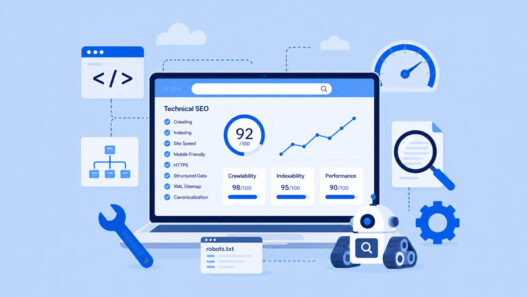
| Technical SEO | Improving website infrastructure | Crawlability, indexing, Core Web Vitals, structured data, HTTPS |
A helpful way to think about them is this:
- On-page SEO tells Google what your page is about.
- Technical SEO helps Google access and understand your website.
- Off-page SEO helps Google decide whether your website is trustworthy.
The strongest websites succeed because all three areas work together rather than independently.
The Core Elements of On-Page SEO
Effective on-page SEO isn’t based on one ranking factor.
Instead, it’s the result of many elements working together to create a page that is useful, trustworthy, and easy to understand.
The most important elements include:
- Keyword research
- Search intent optimization
- High-quality content
- Optimized title tags
- Meta descriptions
- Header hierarchy
- SEO-friendly URLs
- Image optimization
- Internal linking
- External references
- Structured data
- Mobile usability
- Core Web Vitals
- Content freshness
- User experience
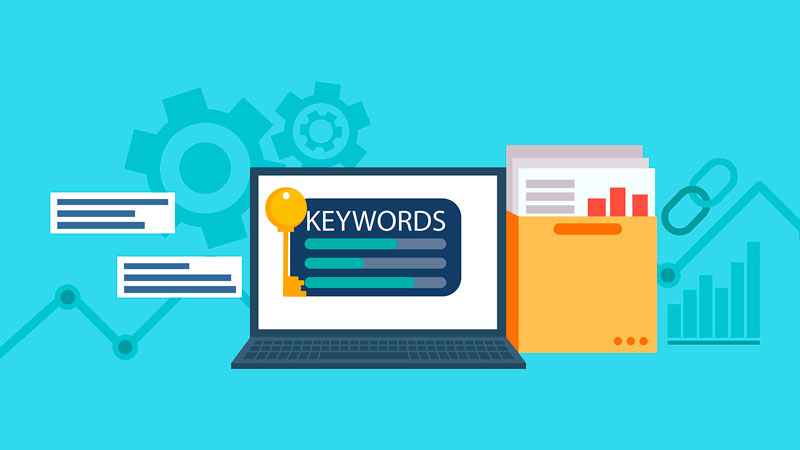
1. Keyword Research: The Foundation of On-Page SEO
Every successful page begins with understanding what your audience is searching for.
Keyword research helps you discover the words and phrases people use when looking for information, products, or services. Rather than guessing what users want, keyword research allows you to create content that matches real search demand.
However, modern keyword research goes beyond finding high-volume keywords.
A balanced SEO strategy should include:
- Primary keywords that define the main topic.
- Secondary keywords that support the primary topic.
- Long-tail keywords that target specific searches with lower competition.
- Question-based keywords that answer common user queries.
- Related entities and semantic terms that help search engines understand context.
For example, a page targeting “on-page SEO” may naturally include related terms such as:
- What is on-page SEO
- On-page SEO checklist
- SEO content optimization
- Title tags
- Meta descriptions
- Search intent
- Internal linking
- Image SEO
Covering these related concepts helps build topical relevance instead of relying on repetitive keyword usage.
Learn more about Keyword Research.
2. Understand Search Intent Before Writing
Even the perfect keyword won’t rank if your content doesn’t satisfy the user’s intent.
Search intent explains why someone performs a search.
Google generally categorizes searches into four intent types:
| Search Intent | User Goal | Example |
|---|---|---|
| Informational | Learn something | What is on-page SEO |
| Navigational | Find a specific website | Google Search Console |
| Commercial | Compare options | Best SEO tools |
| Transactional | Take action | Hire an SEO agency |
Before writing, study the current top-ranking pages.
Ask yourself:
- What type of content is ranking?
- What questions are being answered?
- What information is missing?
- How can I create something more helpful?
Matching search intent is often more important than targeting the highest-volume keyword.
3. Create High-Quality Content That Deserves to Rank
Google’s goal is simple:
Show users the page that provides the most helpful answer.
This means your content should solve problems instead of simply repeating information already available elsewhere.
High-quality content should:
- Answer the user’s question completely.
- Demonstrate expertise.
- Include practical examples.
- Be easy to read.
- Stay accurate and up to date.
- Offer unique insights whenever possible.
Instead of asking, “How can I rank this page?”
Ask,
“How can I create the best resource available on this topic?”
That mindset naturally leads to better content and stronger rankings.
4. Optimize Your Title Tag
The title tag is one of the strongest on-page SEO signals because it tells both search engines and users what the page is about.
It’s also the headline most people see in search results.
An effective title tag should:
- Include the primary keyword naturally.
- Clearly describe the page.
- Encourage clicks.
- Stay within approximately 50 to 60 characters whenever possible.
Instead of writing: SEO Guide
Write something more descriptive, like: On-Page SEO: The Complete Guide to Higher Google Rankings
A clear, compelling title improves both relevance and click-through rate.
5. Write Meta Descriptions That Encourage Clicks
Although meta descriptions aren’t a direct ranking factor, they can influence whether users choose your page over competing results.
A strong meta description should:
- Summarize the page accurately.
- Include the primary keyword naturally.
- Explain the benefit of reading the article.
- Encourage action.
For example:
Learn what on-page SEO is, why it matters, and discover proven techniques to optimize your content, improve rankings, and attract more organic traffic.
Think of the meta description as your page’s advertisement within search results.
6. Use Clear Heading Structure
Headings organize your content for both readers and search engines.
A logical heading structure makes complex information easier to understand while helping search engines identify the most important topics on the page.
Follow a clear hierarchy:
- One H1 for the main page title.
- H2 headings for major sections.
- H3 headings for supporting topics.
- H4 headings only when additional structure is needed.
Avoid using headings simply for styling.
Each heading should accurately describe the content that follows.
Well-structured articles are easier to scan, especially on mobile devices.
7. Create SEO-Friendly URLs
URLs should be simple, descriptive, and easy to understand.
Compare these examples.
Poor URL: example.com/post?id=84592
Better URL: example.com/on-page-seo-guide
Good URLs typically:
- Describe the page.
- Include the primary keyword naturally.
- Avoid unnecessary numbers or parameters.
- Use hyphens between words.
- Remain short and readable.
Simple URLs improve usability and make pages easier to share.
8. Optimize Images for SEO
Images improve engagement, but they also create additional optimization opportunities.
Search engines cannot interpret images exactly as humans do, so they rely on supporting information.
Follow these image optimization best practices:
- Use descriptive filenames.
- Write meaningful alt text.
- Compress large images.
- Choose modern formats such as WebP.
- Specify image dimensions when appropriate.
Instead of naming an image: IMG12345.jpg
Use: on-page-seo-checklist.webp
Descriptive filenames and alt text help search engines better understand your content while improving accessibility for users who rely on screen readers.
Learn more about Image SEO.
9. Build Strong Internal Links
Internal linking is often one of the most overlooked aspects of on-page SEO.
Every internal link helps search engines understand the relationship between pages while guiding visitors toward additional helpful content.
Effective internal linking can:
- Improve crawlability.
- Distribute authority across your website.
- Increase page views.
- Strengthen topical authority.
- Help users discover related resources.
For example, this guide could naturally link to articles about:
These connections create a stronger content ecosystem rather than isolated articles.
Learn more about Internal Linking for SEO.
10. Use External Links Thoughtfully
Some website owners avoid linking to other websites because they worry about losing visitors.
In reality, linking to trustworthy sources can strengthen credibility.
External links should:
- Support factual claims.
- Reference authoritative sources.
- Help readers explore topics in greater depth.
Always prioritize quality over quantity.
Only link to sources that genuinely improve the user’s understanding.
11. Implement Structured Data
Structured data, often called Schema markup, provides additional context that helps search engines understand your content.
Depending on the page type, structured data may enable enhanced search features such as:
- FAQ results
- Product information
- Reviews
- Breadcrumb navigation
- Articles
- Events
Although structured data doesn’t guarantee higher rankings, it can improve visibility within search results and increase click-through rates.
Google also uses structured information to better interpret page content, making it increasingly valuable as search evolves.
Learn more about Structured Data.
12. Keep Content Fresh and Accurate
Publishing a page isn’t the final step.
Search behavior changes.
Industries evolve.
Competitors publish new information.
Review your important pages regularly to:
- Update outdated statistics.
- Improve explanations.
- Expand sections.
- Add new examples.
- Remove inaccurate information.
- Fix broken links.
Content that remains accurate and useful over time is more likely to maintain strong search visibility.
13. Remember That On-Page SEO Is About People First
Every optimization should improve the experience for real users.
Adding keywords, optimizing headings, or improving page speed should never come at the expense of readability or usefulness.
The best-performing pages don’t rank because they are perfectly optimized for search engines.
They rank because they provide the best experience for the people using search engines.
When you focus on creating helpful, well-organized, trustworthy content, on-page SEO becomes a natural extension of good content creation rather than a collection of technical tricks.
Core Web Vitals and Page Experience
Great content alone isn’t always enough to achieve strong search visibility. Users also expect websites to load quickly, respond smoothly, and provide a frustration-free experience.
Google measures these aspects through Core Web Vitals, a set of performance metrics that evaluate real-world user experience.
The three primary Core Web Vitals are:
- Largest Contentful Paint (LCP): Measures how quickly the main content loads.
- Interaction to Next Paint (INP): Measures how responsive a page is after user interactions.
- Cumulative Layout Shift (CLS): Measures visual stability by tracking unexpected layout changes.
Improving these metrics benefits both users and search engines.
Some effective ways to improve page experience include:
- Compress and optimize images.
- Minify CSS and JavaScript files.
- Enable browser caching.
- Reduce unnecessary third-party scripts.
- Use reliable web hosting.
- Implement lazy loading where appropriate.
Fast, stable websites encourage visitors to stay longer, explore more pages, and return in the future.
Learn more about Core Web Vitals.
Optimize for Mobile-First Indexing
More than half of all web traffic now comes from mobile devices, which is why Google primarily uses the mobile version of your website for indexing and ranking.
Your website should provide the same high-quality experience on smartphones as it does on desktop computers.
To improve mobile usability:
- Use a responsive website design.
- Keep font sizes readable.
- Make buttons easy to tap.
- Avoid intrusive pop-ups.
- Ensure navigation remains simple.
- Test your pages on multiple screen sizes.
A mobile-friendly website is no longer optional. It’s a fundamental part of modern on-page SEO.
Learn more about SEO for Mobile.
Build Trust Through E-E-A-T
Google wants to recommend content that users can trust.
That’s why its quality systems evaluate signals related to Experience, Expertise, Authoritativeness, and Trustworthiness (E-E-A-T).
Although E-E-A-T isn’t a direct ranking factor, demonstrating these qualities strengthens the overall quality of your content.
Ways to improve E-E-A-T include:
- Publish accurate, well-researched information.
- Share first-hand experience whenever possible.
- Cite trustworthy sources for important claims.
- Keep content updated.
- Display clear author information.
- Maintain transparent contact and business details.
- Correct outdated or inaccurate content promptly.
Trust is something that develops over time through consistently helpful content.
Learn more about E-E-A-T.
Topical Authority Matters More Than Individual Keywords
Years ago, websites often published isolated articles targeting individual keywords.
Today, search engines evaluate whether a website demonstrates expertise across an entire subject.
Instead of writing one article about on-page SEO, build a complete collection of related resources.
Examples include:
- What Is SEO?
- Technical SEO
- Technical SEO Audit
- Keyword Research
- Internal Linking
- Core Web Vitals
- Image SEO
- Structured Data
- Content Optimization
- Search Intent
Connecting these resources through logical internal links helps search engines understand your expertise while creating a better experience for readers.
Topical authority is built gradually through consistent, high-quality publishing rather than a single article.
On-Page SEO in the Age of AI Search
Search is evolving rapidly.
People now ask questions through AI-powered search experiences that generate answers using information gathered from authoritative websites.
This shift has changed how content should be optimized.
Instead of focusing only on keywords, modern on-page SEO should also help AI systems understand your content.
Some best practices include:
1. Write Clear Definitions
Begin important sections with concise explanations before expanding into greater detail.
This structure makes information easier for both users and AI systems to understand.
2. Use Descriptive Headings
Clear headings improve readability while helping AI identify the purpose of each section.
Avoid vague headings that don’t explain what follows.
3. Answer Questions Directly
Many users ask complete questions instead of typing short keyword phrases.
Including concise answers throughout your content improves its usefulness while increasing the likelihood of being referenced by AI-generated responses.
4. Cover Related Concepts
Instead of repeating the same keyword, naturally discuss related topics that support the primary subject.
This creates stronger semantic relevance while improving topical authority.
5. Keep Content Well-Structured
Organized content using headings, lists, tables, and logical formatting is easier for both people and AI systems to process.
As AI search continues to evolve, websites that prioritize clarity, depth, and accuracy are likely to remain competitive.
Common On-Page SEO Mistakes
Even experienced website owners sometimes overlook important optimization opportunities.
Avoid these common mistakes:
1. Keyword Stuffing
Repeating the same keyword unnaturally doesn’t improve rankings.
Write naturally and focus on helping readers rather than satisfying outdated SEO practices.
2. Ignoring Search Intent
A perfectly optimized page won’t perform well if it answers the wrong question.
Always create content that matches what users actually expect to find.
3. Weak Internal Linking
Publishing excellent content without connecting related pages limits your website’s topical authority.
Every important article should support and strengthen other relevant pages.
4. Duplicate Content
Publishing nearly identical pages creates confusion for both users and search engines.
Whenever possible, consolidate overlapping content into stronger, more comprehensive resources.
5. Neglecting Page Experience
Slow loading speeds, intrusive advertisements, confusing layouts, and poor mobile usability can reduce user satisfaction even if the content itself is excellent.
SEO isn’t only about attracting visitors. It’s also about keeping them engaged.
Complete On-Page SEO Checklist
Before publishing any page, review this checklist.
1. Content
- Matches search intent.
- Provides original value.
- Covers the topic comprehensively.
- Demonstrates expertise.
- Answers common questions.
2. Keyword Optimization
- Primary keyword included naturally.
- Related keywords used appropriately.
- No keyword stuffing.
3. HTML Elements
- Optimized title tag.
- Compelling meta description.
- One H1 heading.
- Logical H2 and H3 structure.
- Clean, descriptive URL.
4. Images
- Compressed for performance.
- Descriptive filenames.
- Meaningful alt text.
- Appropriate dimensions.
5. Internal Linking
- Links to relevant supporting articles.
- Uses descriptive anchor text.
- Avoids broken links.
Technical Quality
- Mobile-friendly.
- Fast loading.
- Secure HTTPS connection.
- Structured data implemented where appropriate.
- No indexing or crawl issues.
Completing this checklist before publishing helps ensure every page meets modern on-page SEO standards.
Final Thoughts
On-page SEO is much more than optimizing keywords or writing better title tags.
It’s about creating webpages that are useful, trustworthy, easy to understand, and enjoyable to use.
Every improvement, whether it’s strengthening your content, improving internal links, optimizing images, or enhancing page speed, contributes to a better experience for both users and search engines.
As search continues to evolve through artificial intelligence, semantic understanding, and changing user behavior, the principles of effective on-page SEO remain consistent.
Focus on helping your audience.
Create content that answers real questions.
Build topical authority instead of chasing individual keywords.
Continuously improve your existing pages rather than treating SEO as a one-time task.
By following these best practices, you’ll create webpages that not only perform well in Google Search but also remain valuable across the next generation of AI-powered search experiences.