Search is changing.
For decades, search engines have primarily helped users find information.
A person entered a query, reviewed search results, visited websites, compared options, and completed an action.
But AI is beginning to change that journey.
Instead of simply helping people find information, AI systems are increasingly being designed to help people complete tasks.
An AI agent may research products, compare services, check availability, evaluate options, fill out forms, or guide users toward completing a transaction.
Google has already introduced agentic capabilities within its AI-powered Search experiences, allowing AI Mode to help users with tasks such as finding restaurant reservations, tickets, and other services.
This raises an important question for website owners and SEO professionals:
What happens when AI systems become active participants on the web instead of simply helping users find websites?
This is where the concept of Agentic SEO becomes relevant.
Agentic SEO is an emerging approach to preparing websites for a future where AI agents can discover information, understand websites, interact with digital services, and potentially help users complete actions.
It does not mean that traditional SEO is becoming obsolete.
In fact, the opposite may be true.
Many of the fundamentals of technical SEO, content structure, accessibility, and information architecture may become even more important.
In this guide, we will explore what Agentic SEO means, how AI agents interact with websites, and what you can do today to prepare your website for an increasingly agent-driven web.
What Is Agentic SEO?
Agentic SEO refers to the practice of optimizing a website so that AI agents can more effectively:
- Discover the website
- Understand its content
- Navigate its pages
- Access relevant information
- Identify available products or services
- Interact with website functionality
- Complete or assist with specific tasks
Traditional SEO primarily focuses on helping search engines understand and rank web pages.
Agentic SEO expands that perspective.
The goal is not simply:
“Can an AI system find and understand my content?”
It may also involve asking:
“Can an AI system successfully interact with my website?”
For example, a traditional search user may search for:
“Best hotels in Dhaka”
They review several search results and manually visit hotel websites.
An AI agent, however, could potentially receive a much more complex instruction:
“Find me a hotel in Dhaka for three nights, within this budget, near these locations, with free breakfast and good customer reviews.”
The AI system may need to:
- Understand the user’s requirements.
- Search for relevant options.
- Access multiple websites.
- Compare prices and availability.
- Identify the best matches.
- Present the available options.
- Direct the user toward completing a booking.
This represents a fundamentally different interaction with the web.
AI Search vs AI Agents
AI search and AI agents are related, but they are not exactly the same.
A. AI Search
AI-powered search primarily helps users:
- Find information
- Understand complex topics
- Compare options
- Discover websites
- Continue searching through follow-up questions
Google AI Overviews and AI Mode are examples of AI-powered search experiences.
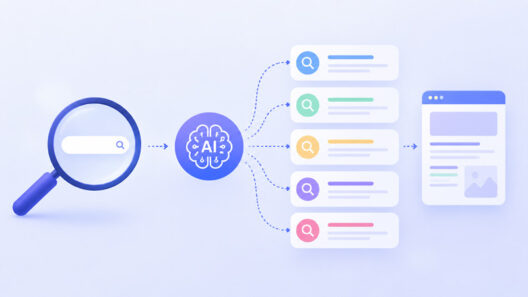
Google’s AI Mode can break complex questions into multiple related searches, sometimes referred to as query fan-out, and combine information from multiple sources into a response.
B. AI Agents
AI agents go further.
An AI agent may be designed to take action toward completing a goal.
Depending on its capabilities and permissions, an agent could potentially:
- Search websites
- Compare options
- Check availability
- Navigate multiple pages
- Fill in information
- Interact with online services
- Recommend the best available option
The important distinction is this:
Search primarily helps users find answers.
Agents may help users get things done.
That distinction could have major implications for websites in the future.
Why Agentic SEO Is Becoming Important
The web was originally designed around human interaction.
Humans can easily understand visual layouts, buttons, menus, product pages, and complicated interfaces.
But an AI agent may need to interpret the same information programmatically.
Imagine two websites selling the same product.
Website A
- Clear product names
- Structured product information
- Accessible HTML
- Transparent pricing
- Clear availability information
- Logical navigation
- Standardized forms
- Well-defined actions
Website B
- Important information hidden behind complex JavaScript
- Unclear buttons
- Missing product details
- Inconsistent page structures
- Difficult navigation
- Important content displayed only visually
A human might eventually figure out both websites.
An automated system may find the first website significantly easier to understand and interact with.
This is why technical clarity could become increasingly important.
Google’s current guidance already emphasizes many of these fundamentals for its AI-powered search features, including crawlability, internal linking, textual accessibility, page experience, and accurate structured data.
How AI Agents May Interact With Websites
AI agents will not all interact with websites in exactly the same way.
Different systems may use different technologies and approaches.
However, agent interactions may generally involve several stages.
1. Discovery
The AI system first needs to discover that your website, service, or resource exists.
This may happen through:
- Search engines
- Direct links
- APIs
- Business listings
- Product feeds
- Structured data
- Digital directories
- Other connected services
Traditional SEO remains important at this stage.
If your content cannot be discovered or indexed effectively, an AI system may have fewer opportunities to encounter it.
2. Understanding
Once an agent finds your website, it needs to understand what information is available.
Clear content structure can help.
This includes:
- Descriptive page titles
- Clear headings
- Logical content organization
- Meaningful internal links
- Accessible text
- Accurate product information
- Clear descriptions
The easier it is to understand what a page is about, the easier it may be for both humans and machines to use the information.
3. Navigation
An AI agent may need to move through multiple parts of a website.
For example:
Homepage → Category Page → Product Page → Availability → Checkout
A confusing website architecture can create friction.
Strong internal linking and logical information architecture can make important content easier to find.
This is already an important part of technical SEO.
In an agent-driven web, it could also influence how efficiently automated systems navigate a website.
4. Interaction
The most advanced stage involves performing actions.
An AI agent may eventually need to interact with:
- Search forms
- Booking systems
- Product filters
- Contact forms
- Appointment systems
- Shopping carts
- Other digital services
This is where agent-friendly website design becomes particularly interesting.
A website may contain excellent content but still be difficult for an automated system to interact with if important functionality is unclear or unnecessarily complex.
Google’s Growing Interest in Agentic Search
The idea of AI agents performing tasks is no longer entirely theoretical.
Google has been actively developing agentic capabilities within Search.
Google’s AI Mode has introduced capabilities designed to help users complete tasks by searching across websites for information such as real-time availability and then presenting relevant options.
At Google I/O 2026, Google also described further developments involving AI agents and Search, indicating that agentic capabilities are becoming an increasingly important part of the company’s broader AI strategy.
This does not mean every website needs to completely redesign itself for AI agents today.
The technology is still evolving.
However, it does mean that SEO professionals should begin paying attention.
How to Optimize Your Website for AI Agents
There is no universal checklist that guarantees a website will work perfectly with every AI agent.
The technology is developing too quickly for that.
However, website owners can focus on several practical areas that are likely to improve both traditional SEO and agent accessibility.
1. Start With Strong Technical SEO
Before worrying about futuristic AI optimization techniques, make sure your technical SEO fundamentals are working correctly.
Your website should have:
- Crawlable pages
- Proper indexability
- Logical URL structures
- Clean internal linking
- Accessible content
- Fast-loading pages
- Proper HTTP status codes
- Functional XML sitemaps
Google’s official guidance is clear that existing SEO best practices remain relevant for its generative AI search features. A page generally needs to be indexed and eligible to appear in Google Search before it can be considered for AI-powered Search experiences.
This is an important lesson.
Agentic SEO should not distract you from fixing basic SEO problems.
If your website has broken navigation, poor crawlability, orphan pages, or important content blocked from search engines, those problems should be addressed first.
2. Make Important Information Available in Text
Machines often struggle when important information exists only in a visual format.
For example:
Bad:
“A product specification displayed only as an image.”
Better:
“Product specifications presented as readable HTML text, potentially supported by images.”
Important information should be accessible whenever possible.
This includes:
- Product details
- Prices
- Service information
- Opening hours
- Availability
- Policies
- Instructions
- Specifications
Google specifically recommends making important content available in textual form as part of its guidance for AI features in Search.
This principle can also make your content more accessible to screen readers and other technologies.
3. Build a Clear Information Architecture
A website should not feel like a maze.
Humans and machines benefit from logical organization.
Consider the structure:
Homepage
→ Services
→ Individual Service Pages
→ Pricing
→ Case Studies
→ Contact
Each section should have a clear purpose.
Internal links should help users and search systems discover relevant pages.
Avoid creating important pages that are difficult to reach.
Strong information architecture helps:
- Users
- Search engines
- Crawlers
- AI systems
- Future AI agents
4. Use Clear and Descriptive Language
Ambiguity creates problems.
Imagine a website with a button that simply says:
“Click Here”
Now compare it with:
“Book a Consultation”
The second option provides more context.
Clear labels and descriptive content can help both humans and automated systems understand the purpose of an action.
Where appropriate, use descriptive:
- Button labels
- Navigation links
- Headings
- Page titles
- Product names
- Form instructions
The goal is not to write everything for robots.
The goal is to reduce unnecessary ambiguity.
5. Make Website Actions Predictable
AI agents may eventually need to understand what actions are available on a page.
Website functionality should therefore be reasonably predictable.
For example:
- A search button should initiate a search.
- A booking button should lead toward booking.
- A product page should clearly identify the product.
- A checkout process should follow logical steps.
This is also good user experience.
Complexity may sometimes be necessary, but unnecessary friction should be avoided.
A website that is easy for a person to navigate may also be easier for automated systems to interpret.
6. Use Structured Data Correctly
Structured data helps search engines understand specific information on a page.
Depending on the type of website, this may include:
- Product information
- Reviews
- Recipes
- Events
- Businesses
- Job postings
- Articles
- Videos
However, structured data should always accurately reflect the visible content of the page.
Google specifically recommends ensuring that structured data matches the visible text on the page.
Do not add structured data simply because you believe it will magically make your website “AI-ready.”
Structured data is useful when it accurately describes information that actually exists.
7. Keep Product and Service Information Up to Date
This is particularly important for businesses with dynamic information.
AI systems may need accurate information about:
- Prices
- Availability
- Inventory
- Business locations
- Opening hours
- Services
Outdated information creates a poor experience regardless of whether a human or AI system encounters it.
Google also recommends keeping relevant Merchant Center and Business Profile information current where applicable.
For businesses that want to participate in increasingly automated search and commerce experiences, data accuracy could become even more important.
8. Reduce Unnecessary JavaScript Complexity
JavaScript is not inherently bad for SEO or AI systems.
Modern search engines can process significant amounts of JavaScript.
However, unnecessary complexity can still create problems.
Important content should not depend on fragile interactions when simpler solutions are available.
Consider whether critical information:
- Requires multiple JavaScript events
- Appears only after complex interactions
- Is hidden unnecessarily
- Cannot be accessed without extensive client-side processing
The question is not:
“Should I remove JavaScript from my website?”
The better question is:
“Can users and search systems reliably access the information that matters?”
Technical accessibility should always come before unnecessary complexity.
9. Make Forms and Transactions Easier to Understand
This may become one of the most important areas of Agentic SEO.
Imagine an AI agent attempting to help a user book an appointment.
The process might involve:
- Selecting a service.
- Choosing a date.
- Selecting a time.
- Entering contact information.
- Reviewing the booking.
Each step should be clear.
Forms should have:
- Proper labels
- Clear instructions
- Logical field structures
- Meaningful error messages
- Predictable workflows
These principles already support accessibility and user experience.
They may also help future automated systems better understand the process.
10. Explore APIs and Machine-Readable Services
Some websites provide information through APIs.
For businesses with complex products or services, APIs may eventually become increasingly important for connecting services with AI systems.
For example, an AI agent might need access to:
- Real-time product availability
- Service availability
- Pricing information
- Booking options
- Shipping information
However, this is not a requirement for every website.
A small informational blog does not necessarily need an API.
The appropriate technical approach depends on the type of business and the actions users need to perform.
What About llms.txt?
One of the biggest discussions surrounding AI optimization has involved llms.txt.
The proposed file is intended to provide AI systems with a simplified representation of important website information.
However, website owners should be cautious about treating it as an essential SEO requirement.
Google’s official documentation states that you do not need to create new machine-readable files, AI text files, or special markup to appear in Google AI Overviews or AI Mode.
This is important.
There is currently no reason to believe that simply adding an llms.txt file will automatically improve your Google AI search visibility.
If you want to experiment with emerging technologies, that is your choice.
But do not ignore established SEO fundamentals while chasing unproven optimization tactics.
The Rise of Agent-Friendly Website Standards
The technology behind AI agents is still developing.
New standards and protocols are beginning to emerge that could help agents discover and interact with digital services.
For example, Google announced the Agentic Resource Discovery specification in June 2026 as an open approach designed to help agents discover and verify tools, skills, and other AI capabilities across the web.
Google’s own generative AI optimization guidance also recommends that website owners interested in this emerging area explore agentic experiences and evolving agent-friendly website practices.
The important word here is:
Emerging.
SEO professionals should monitor these developments without immediately assuming that every new protocol is necessary for every website.
Agentic SEO for Different Types of Websites
Agentic SEO will likely look different depending on the website.
E-Commerce Websites
Potential priorities include:
- Accurate product data
- Clear prices
- Real-time availability
- Structured product information
- Logical categories
- Easy checkout processes
Local Businesses
Potential priorities include:
- Accurate opening hours
- Updated service information
- Location data
- Appointment availability
- Clear contact options
SaaS Companies
Potential priorities include:
- Clear product documentation
- Transparent pricing
- Accessible product information
- Well-documented integrations
- Functional APIs where relevant
Publishers and Content Websites
Potential priorities include:
- Crawlable content
- Clear article structures
- Strong author information
- Original expertise
- Accurate citations
- Logical internal linking
Service-Based Businesses
Potential priorities include:
- Clear service descriptions
- Transparent processes
- Pricing information
- Booking options
- Contact forms
- Case studies
The fundamental question remains the same:
Can an AI system understand what you offer and help a user take the next appropriate action?
How Agentic SEO Could Change Keyword Research
Traditional keyword research focuses heavily on individual searches.
For example:
- Best SEO agency
- Technical SEO services
- SEO audit services
But AI agents may receive much more complex instructions.
For example:
“Find me an SEO agency with technical SEO experience, enterprise clients, transparent pricing, and experience working with SaaS companies.”
This is not a single keyword.
It is a collection of requirements.
This could encourage SEO professionals to think beyond keyword matching and focus more heavily on:
- Complete topical coverage
- Clear service information
- Entity relationships
- Comparative information
- User requirements
- Real-world attributes
The goal becomes helping systems understand not only what keywords a page targets, but also what the business actually offers.
The Relationship Between Agentic SEO and Entity SEO
Entities may become increasingly important in an AI-driven web.
An entity can represent something identifiable, such as:
- A person
- Company
- Product
- Location
- Service
- Organization
Search engines and AI systems need context.
For example, if an AI agent encounters a business name, it may need to understand:
- What the business does
- Where it operates
- Which services it offers
- Who it serves
- How it differs from competitors
A clear digital presence can help establish these relationships.
This may include consistent information across:
- Your website
- Business profiles
- Social platforms
- Industry directories
- Authoritative references
However, accuracy matters more than simply creating mentions everywhere.
Agentic SEO Does Not Mean Manipulating AI
As with every new SEO trend, there will likely be people promoting shortcuts.
You may eventually hear claims such as:
- “Add this file to rank in AI agents.”
- “Use these hidden prompts to control AI.”
- “Repeat these phrases to influence agents.”
- “Create pages specifically for robots.”
Website owners should be skeptical of such claims.
Google’s current guidance emphasizes unique, valuable content and foundational SEO rather than special AI optimization tricks. It specifically advises website owners that many commonly promoted tactics, including unnecessary AI text files and artificial optimization strategies, are not required for visibility in Google’s generative AI features.
The same principle should guide Agentic SEO.
Build a website that provides genuine value and communicates information clearly.
A Practical Agentic SEO Checklist
Here is a practical starting point for website owners.
Technical Foundation
- Is your website crawlable?
- Are important pages indexable?
- Are important pages internally linked?
- Are HTTP status codes working correctly?
- Does your XML sitemap include important pages?
Content Accessibility
- Is important information available in text?
- Are headings clear and descriptive?
- Are product and service details easy to understand?
- Is your information accurate and up to date?
Website Structure
- Is your navigation logical?
- Can users easily reach important pages?
- Are page relationships clear?
- Are important pages buried deep within the website?
User Actions
- Are buttons clearly labeled?
- Are forms easy to understand?
- Are booking processes logical?
- Are transaction steps predictable?
Structured Information
- Does your structured data accurately match visible content?
- Are product and business details current?
- Are important data sources maintained?
Future Readiness
- Are you monitoring emerging agent technologies?
- Does your business have APIs where they provide genuine value?
- Are you avoiding unproven AI SEO shortcuts?
- Are you following developments from major search and AI platforms?
How to Prepare for Agentic Search Today
The best approach is not to panic.
You do not need to completely redesign your website tomorrow.
Instead, focus on improving the fundamentals.
Step 1: Fix Your Technical SEO
Start with crawlability, indexability, internal linking, and website performance.
Step 2: Improve Your Information Architecture
Make your website easier to navigate.
Step 3: Make Important Information Clear
Avoid hiding essential information unnecessarily.
Step 4: Improve User Experience
Clear forms, navigation, and actions help everyone.
Step 5: Keep Your Data Accurate
Ensure your products, services, prices, and business information are current.
Step 6: Monitor Emerging Technologies
Follow developments around AI agents without blindly adopting every new trend.
This balanced approach allows you to prepare for the future without sacrificing your current SEO performance.
The Future of Agentic SEO
It is still too early to know exactly what Agentic SEO will look like in five years.
AI agents are evolving quickly.
Search engines are experimenting with agentic capabilities.
New protocols are emerging.
The relationship between users, search engines, AI systems, and websites is becoming increasingly complex.
But one thing appears clear.
The web may gradually move from:
Humans searching for websites
toward:
AI systems helping humans find, evaluate, and interact with websites.
This does not mean websites will disappear.
It means the way people reach and interact with them may evolve.
The websites that are easiest to discover, understand, navigate, and use may have an advantage in this new environment.
Final Thoughts
Agentic SEO is still an emerging concept.
There is no single plugin, file, schema markup, or optimization trick that can make a website perfectly prepared for every future AI agent.
And that is an important point to remember.
Google’s own guidance continues to emphasize that traditional SEO fundamentals remain the foundation of visibility in its AI-powered Search experiences.
For now, the best strategy is relatively straightforward.
Create a technically accessible website.
Publish clear and valuable information.
Build logical navigation.
Make important actions easy to understand.
Keep your business data accurate.
And pay attention to the evolution of AI agents.
The future of search may not be limited to helping users find the right answer.
It may increasingly involve helping them complete the next step.
And when AI agents become more active participants on the web, websites that are prepared to communicate clearly with both humans and machines may be in the strongest position to benefit.